Discover how MOMA International approaches inclusive interior design, sensory comfort and accessibility through its work at Zayed National Museum.
Great design is not simply about how a space looks; it is also about how people experience it. For people with a range of physical, sensory and cognitive needs, thoughtful interior design can support comfort, dignity and belonging in public environments.
As the UAE advances its commitment to accessibility, inclusive interior design is moving beyond regulatory compliance towards a more human-centred approach.
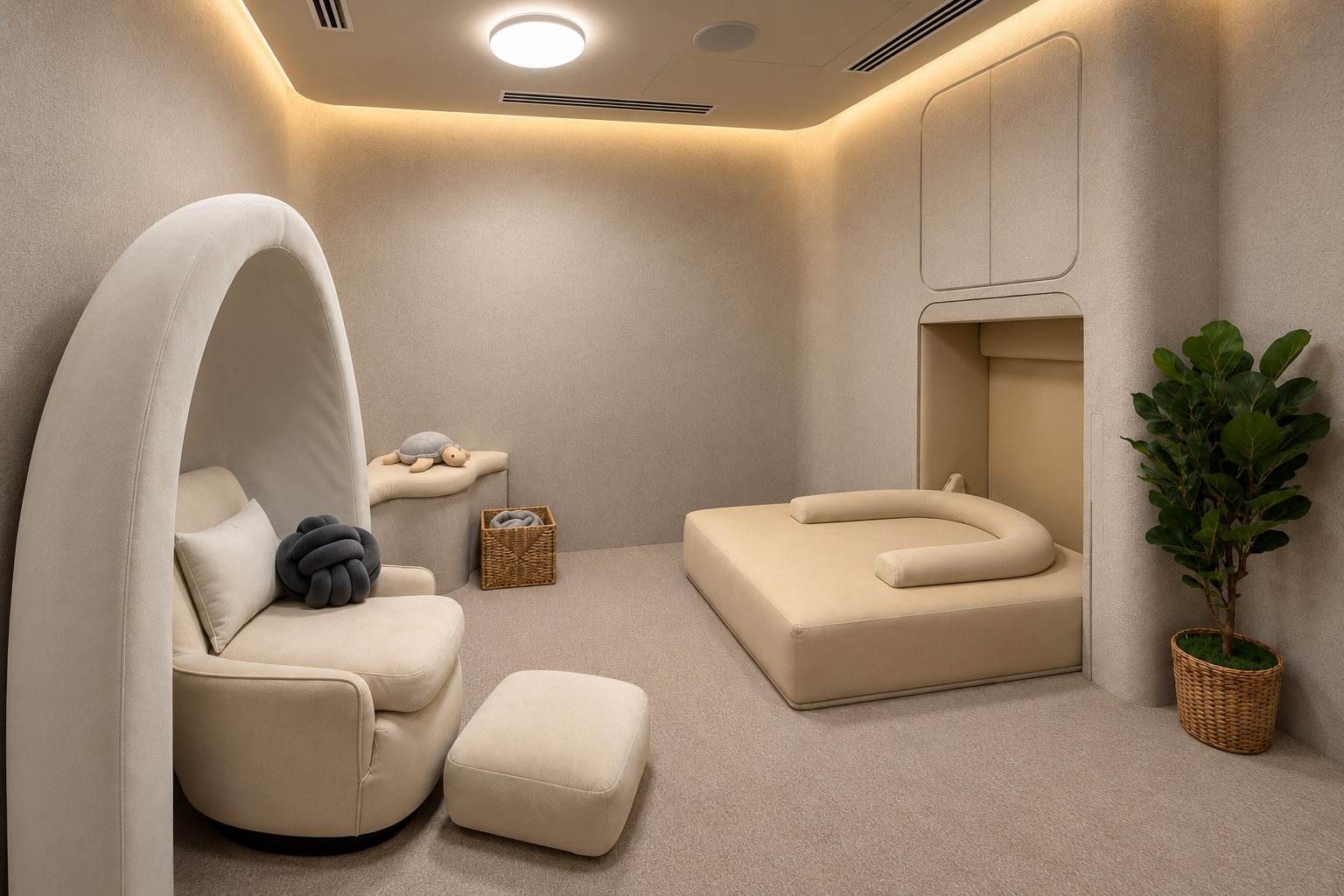
At Zayed National Museum in Abu Dhabi, MOMA and MAUVE by MOMA, the studio’s bespoke furniture division, contributed to enhancement works in a dedicated Calm Room. The work was coordinated with Mr. Lee Wee Meng of Arch Vogue, Singapore, the project’s main consultant.
Safety, sensory comfort and day-to-day functionality informed the interventions. Soft finishes, rounded edges, carefully considered upholstery and concealed components were selected to support a safer, more welcoming environment.
For people with sensory sensitivities, small design decisions can make a meaningful difference. Controlled lighting, tactile materials, reduced visual clutter and thoughtful acoustics can help reduce sensory strain and make an environment feel more predictable, while still retaining its character.
Accessibility extends beyond ramps, clear circulation routes and physical access. It also considers how people navigate, engage with and find space to pause or withdraw within their surroundings.
Quiet spaces and intuitive transitions can give people greater control over their experience, particularly in stimulating public environments.
The Calm Room enhancements illustrate how inclusive design can take shape through a series of considered interventions, rather than through a single feature.
From cultural institutions and hospitality destinations to workplaces and educational environments, universal design principles can inform spaces across many sectors.
For MOMA International, the future of design lies in creating spaces that thoughtfully accommodate a range of physical, sensory and cognitive needs.
The most meaningful spaces are accessible, welcoming and designed with the needs and experiences of different people in mind.