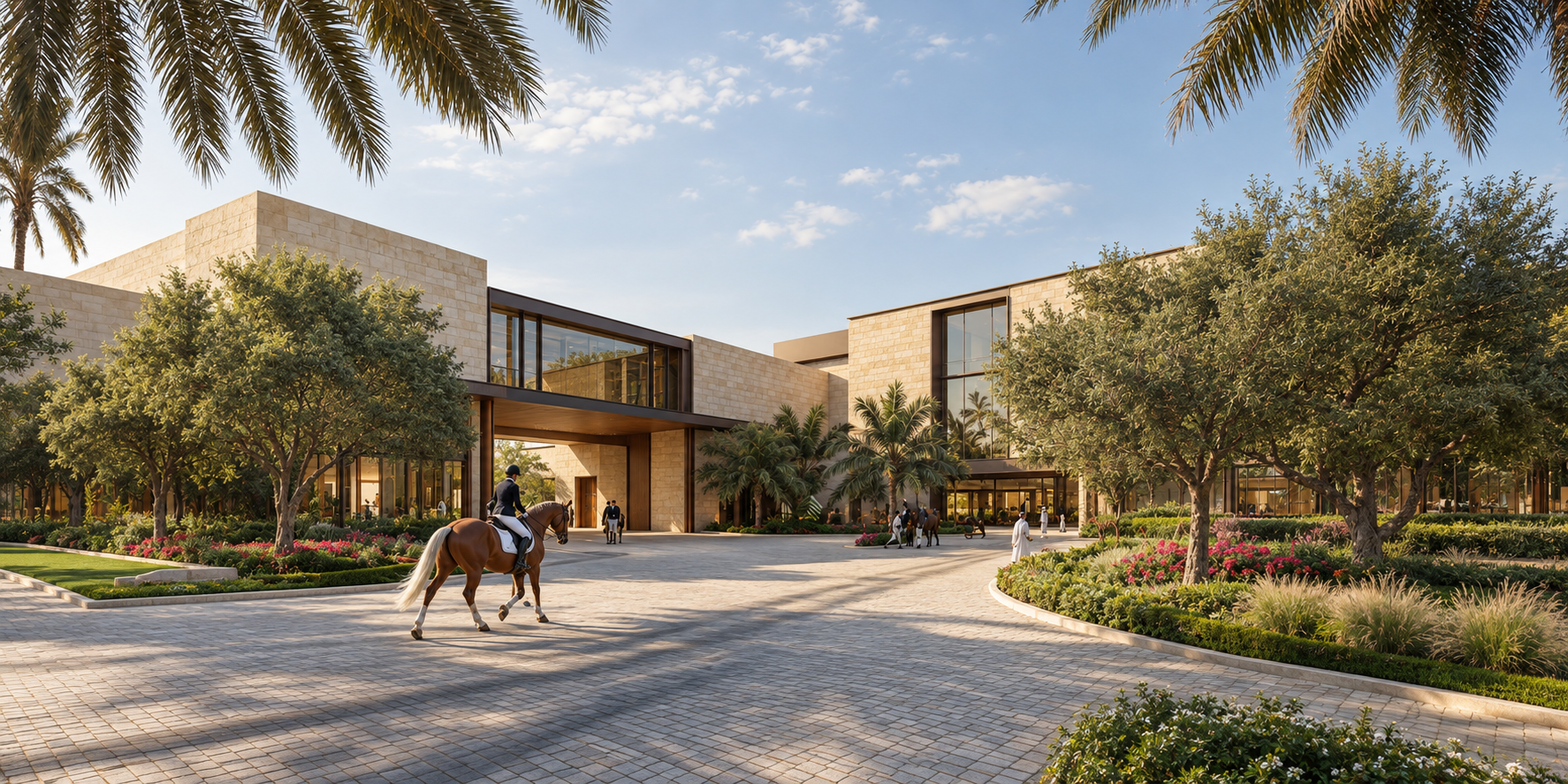
Explore how equestrian architecture and landscape design in the UAE balance climate, horse welfare, human experience and long term asset value.
In the Gulf, equestrian design begins with one uncompromising consideration: the horse.
There is something uniquely powerful about designing around such a noble and highly perceptive creature defined by movement, grace, sensitivity, scale and instinct. A successful equestrian destination must understand not only how a horse moves through a space, but how it experiences it: the heat beneath its feet, the intensity of the sun, the movement of air, the availability of shade and the calm of its surroundings.
Creating equestrian destinations in hot climates therefore requires architecture and landscape to work together as a finely balanced ecosystem. Heat, solar exposure, ventilation, hydration and surface temperatures directly influence equine welfare, making climate responsive design fundamental.
At MOMA International, our experience designing equestrian environments across the Gulf and wider region has taught us that the horse must inform the master plan from the beginning. This means considering the horse's entire journey. Stables are only the starting point. Paddocks, arenas, exercise routes and holding areas must flow intuitively, creating environments in which horses can move safely and naturally.
Here, landscape architecture becomes both beautiful and purposeful. Layers of planting cast welcome shade. Protected routes offer respite from the sun. Intelligent water and dust management help soften the harshness of the climate and quality of air for the horses. Every intervention contributes to creating a cooler, calmer landscape for horses, riders, residents and visitors.
The finest equestrian architecture goes beyond technical performance. There should be a quiet poetry to these places: horses moving effortlessly through the landscape, architecture sitting naturally within its surroundings and the boundaries between sport, nature and lifestyle beginning to disappear.
For private developers, this beauty must also endure. Durable materials, efficient irrigation, energy and water consumption, maintenance and adaptability all contribute to the long-term performance and asset value of an equestrian development.
Ultimately, designing for horses demands empathy as much as expertise. The most compelling equestrian masterplans do not force architecture onto the landscape. They listen first, allowing climate, nature, movement and the instinctive needs of the horse to shape every line.